Too Many Meetings Don’t Make You More Productive. They’re Stealing Your Time.
There is a deeply rooted idea in many companies:
If we need to coordinate, we have a meeting.
There’s a problem? Meeting.
A decision needs to be made? Meeting.
We need to inform the team? Meeting.
We don’t know how to solve it? Another meeting.
Until one day you look at your calendar and realise you’ve spent practically the entire morning in meetings.
And you still have to find time to do your actual work.
This has a name: Meetingitis.
We’re not saying meetings are bad.
A good meeting can save days of work, accelerate a decision or solve a complex problem in 30 minutes.
The problem starts when meeting becomes the automatic response of an organisation.
And that’s where the real cost begins.
The problem isn’t having meetings. It’s having meetings that create no value.
Research published in the Journal of Business Research, involving employees from 41 countries, found that fewer than half considered their regular meetings to be an effective use of their time.
The study also found that employees were often invited to meetings with little personal relevance and that meeting organisers frequently failed to apply basic meeting-design practices. (ScienceDirect)
Microsoft reached a similar conclusion in its Work Trend Index: inefficient meetings were identified as the number-one productivity disruptor, while having too many meetings ranked among the main obstacles to productivity.
Microsoft also found that employees spend around 57% of their time communicating — in meetings, email and chat — compared with 43% creating documents, spreadsheets and presentations. 68% said they did not have enough uninterrupted focus time during their workday. (Microsoft)
This isn’t just a feeling.
It’s a management problem.
How much does a meeting really cost?
A one-hour meeting doesn’t cost one hour.
If 8 people attend, we have just consumed:
8 hours of work.
At an average labour cost of €50 per hour:
€400 for one meeting.
If it happens every week:
€20,800 per year.
And that’s only the direct cost.
We haven’t included the time required to prepare, the minutes lost between meetings, interruptions or the work that gets pushed to later.
That’s why one of the first questions any company should ask is:
How much are we really spending on meetings?
The hidden cost: not having time to work
This is probably the problem we measure the least.
A calendar full of meetings doesn’t just consume hours.
It fragments the day.
Meeting.
15 minutes.
Another meeting.
10 minutes.
Teams.
Email.
Another meeting.
And when you finally have an hour free, you no longer have an hour of focused work.
You have an hour between meetings.
Microsoft’s research highlights the growing difficulty of maintaining uninterrupted focus time and identifies inefficient meetings and excessive meeting load among the major productivity disruptors. (Microsoft)
The consequence is quite simple:
it becomes increasingly difficult to find time to think.
And thinking is work too.
So, what do we do?
We don’t believe in the easy solution:
“From now on, we ban meetings.”
Nor in turning every Monday into a No Meeting Day simply because it’s fashionable.
Meetings are necessary.
The question is different.
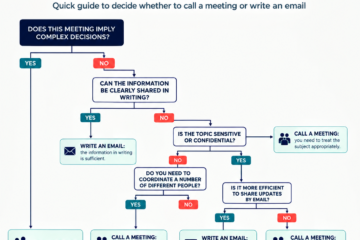
1. Ask whether we really need to meet
Before sending an invitation:
Can we solve this without a meeting?
2. Have a clear objective
A meeting should have a specific reason to exist.
Inform.
Decide.
Create.
Solve.
Coordinate.
But not simply:
“Follow up.”
3. Invite fewer people
More participants don’t necessarily mean better decisions.
If someone doesn’t need to contribute, decide or receive information in real time, perhaps they don’t need to be there.
4. Reduce the duration
A 60-minute meeting doesn’t have to last 60 minutes.
Try 45.
Or 25.
Default meeting duration is also a decision.
5. Protect focus time
We can’t demand productivity while filling calendars with meetings.
Focus Time isn’t free time.
It’s work time.
6. Measure
Number of meetings.
Hours.
Participants.
Cost.
Duration.
Decisions.
Actions.
Because what we don’t measure, we can hardly improve.
The solution isn’t fewer meetings. It’s better meetings.
This is where the research gets particularly interesting.
A 2025 study published in Business Horizons introduced the concept of the meeting load paradox.
The researchers found that meetings can create value through participation, engagement and collaboration — but the benefits do not increase indefinitely.
At a certain point, increasing meeting load becomes a burden rather than a benefit. Their field study of 199 full-time employees found a curvilinear relationship between meeting load and outcomes such as participation, engagement and creative performance. (ScienceDirect)
This is the important part.
We don’t want a company without meetings.
We want a company where every meeting has a reason to exist.
Where meetings end with a decision, an action or an outcome.
Where the calendar isn’t a measure of importance.
And where professionals have time to do what they were hired to do.
That is what we mean by fighting Meetingitis.
And this is our starting point
At Meetingitis, we are building an initiative to help companies and professionals diagnose, measure and reduce unproductive meetings.
We are developing our own methodology, diagnostic tools, templates, resources and a Meeting Calculator to understand how much time and money we are losing to meetings.
Because before trying to improve the meetings in an organisation, there is a much simpler question:
Do you know how much they are costing you?
👉 Start with our Meeting Calculator.
Sources & further reading


0 Comments