“This meeting should have been an email.”
You’ve probably thought it. Maybe you’ve even said it.
The phrase has become one of the most recognizable memes of modern workplace culture. It captures a very common frustration: meetings that are unnecessary, too long, or simply used to share information.
There is no single, well-documented creator or moment of origin. The expression emerged from office culture and became widely popular as remote work and video meetings expanded. (McKinsey & Company)
When should a meeting have been an email?
Sometimes, the answer is obvious.
A meeting probably should have been an email when it is:
- A one-way information update.
- A status report with no decision to make.
- A simple task follow-up.
- A presentation where someone simply reads the slides.
- A recurring meeting that exists because “we’ve always had it.”
In these situations, email or another asynchronous communication tool can save everyone time.
But there is an important catch:
Not every meeting should be an email.
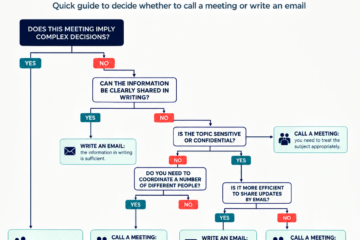
When people need to make a decision, resolve disagreement, negotiate, solve a complex problem or create something together, synchronous interaction can be exactly what is needed.
The problem isn’t meetings. It’s unnecessary meetings.
The goal isn’t to eliminate meetings.
It is to make them fewer, shorter and more relevant.
Before sending a calendar invitation, ask one simple question:
Do we really need to be together at the same time to achieve the objective?
If the answer is no, send the email.
If the answer is yes, define the objective, invite only the people who need to be there and give the meeting the shortest possible amount of time.
That is how we fight Meetingitis.
Because meetings should create decisions, actions and results — not simply consume time.
Fewer meetings. Better meetings. More time to work.
👉 Discover how to fight Meetingitis and make every meeting count.


0 Comments